ServicesRoof Replacement
Roof Replacement in The Village, OK
A new roof only makes sense when the old one can't be fixed. We strip it to the deck, correct the ventilation or flashing problems that shortened its life, and install a system that holds up to Oklahoma hail and heat. You see a written line-item estimate first.
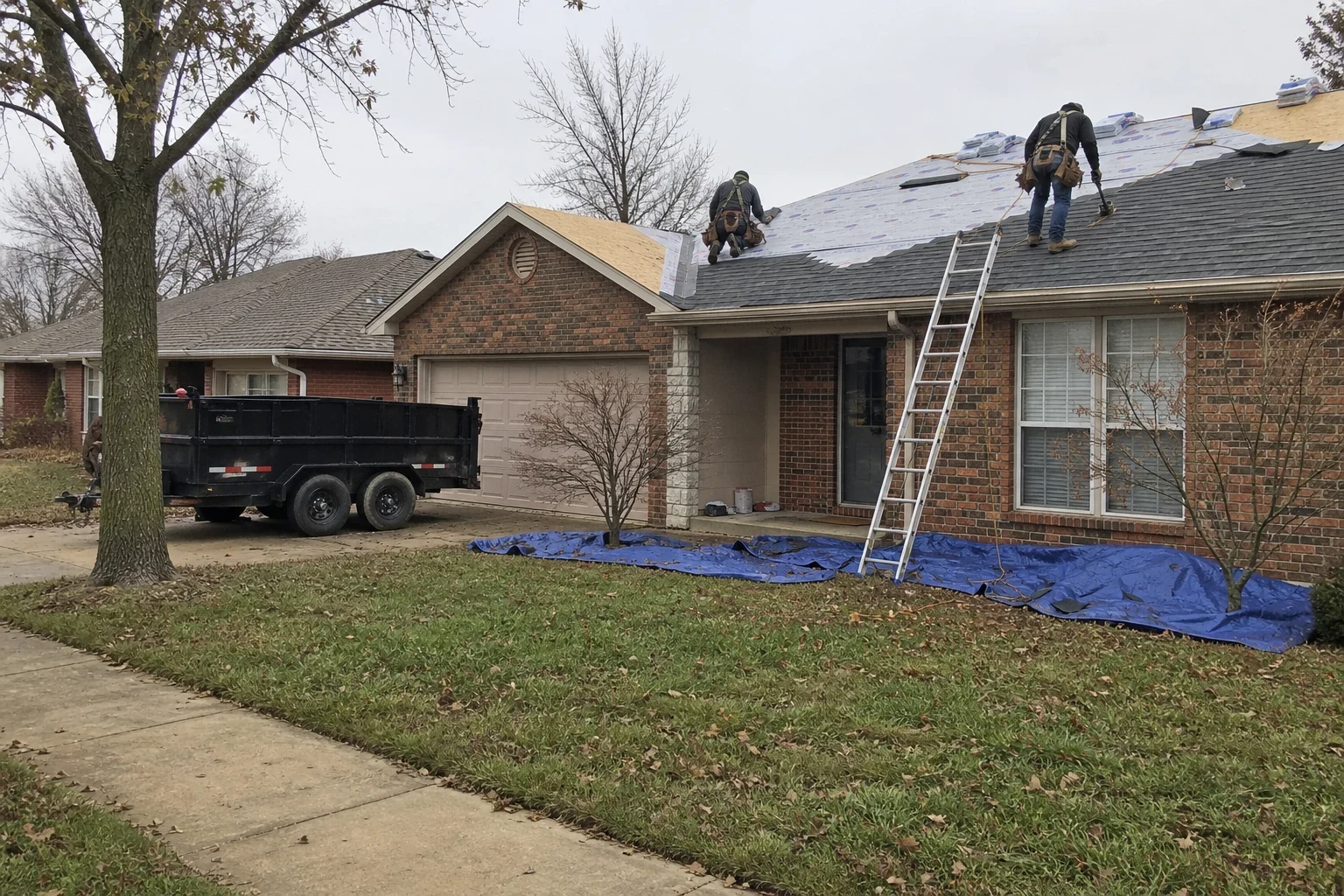
When replacement is the right answer
Most roofs we look at don't need replacing. A lifted step flashing, a cracked pipe boot or a few wind-torn tabs can be repaired for far less, and our Roof Repair page covers that work. Replacement is the right call when the damage runs across the whole field: shingles that have lost their granules and gone brittle, hail bruising on every slope, leaks in several places, or decking that has gone soft under the shingles.
Before we recommend it, we find out why the current roof failed. Blistered shingles often trace back to an attic that can't vent its heat. Rot along the eaves usually means water got behind an overflowing gutter or there was never a drip edge. Put new shingles over the same conditions and they age the same way, so our estimate covers the cause as well as the covering.
What goes into the job
Strip to bare wood
Every old shingle and every sheet of underlayment comes off rather than being buried under a new layer. That exposes the decking for inspection and avoids the extra weight and trapped heat of a double layer.
Sheathing inspection and replacement
With the deck bare, we check each section and swap out plywood or OSB that has rotted, softened or started to separate. We photograph every replaced sheet so you see the reason for it.
Underlayment and leak barrier
The open field gets synthetic underlayment. Valleys, eaves and the areas around pipes and vents get self-adhering ice and water membrane, because those are the spots where ice dams and blowing rain force water upward.
Fresh flashing and drip edge
Sidewalls get new step flashing, every plumbing vent gets a new boot, and metal drip edge runs along eaves and rakes. Old flashing nailed back in place is a frequent cause of leaks on young roofs.
Ventilation correction
We measure intake at the soffits against exhaust at the ridge or roof vents and fix any imbalance. Heat trapped in a poorly vented attic cooks the shingles from underneath and shortens their life.
Yard protection and nail sweep
We drape tarps over plants and siding, toss debris directly into the dumpster, and roll a magnet across the driveway, lawn and flower beds to collect stray nails.
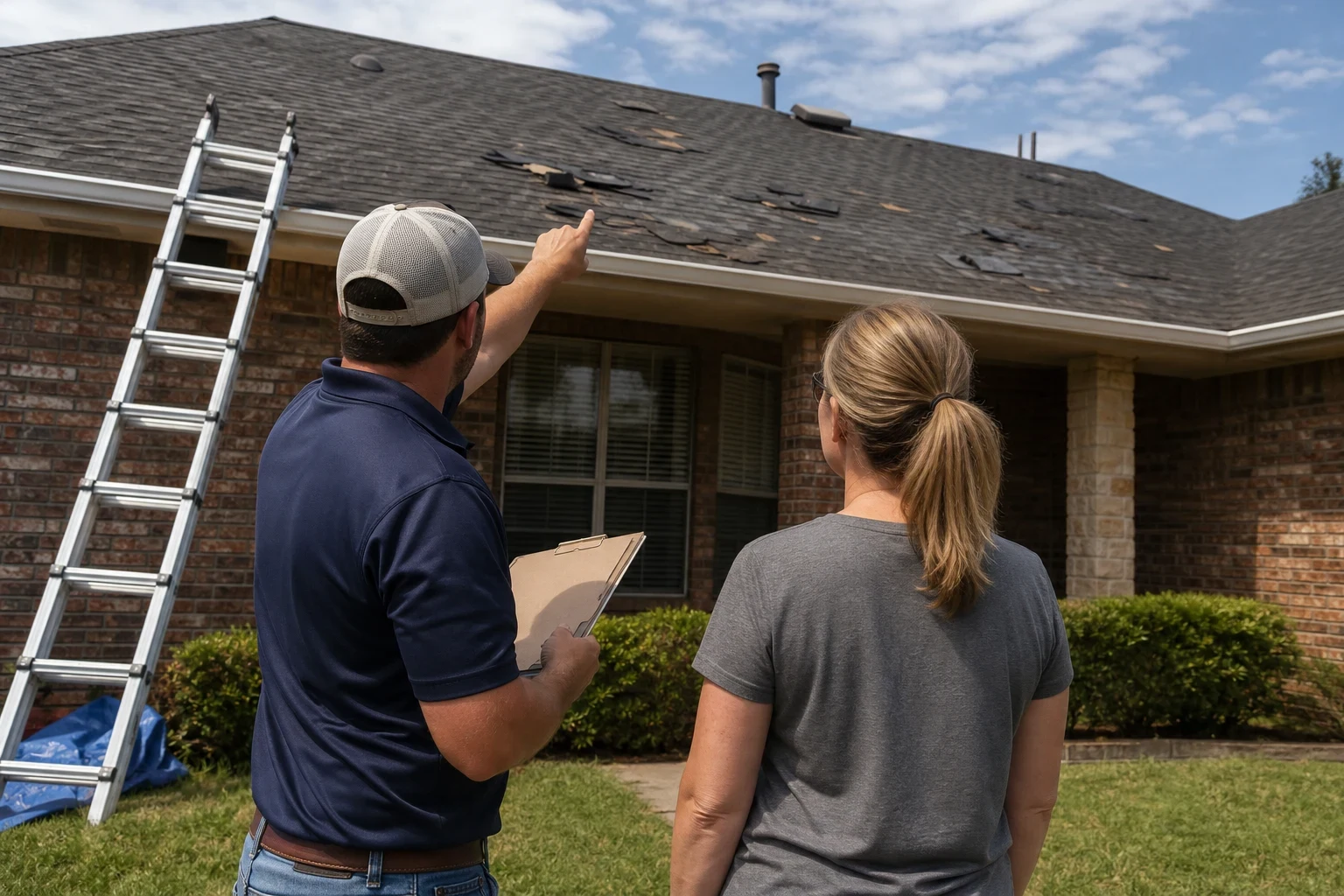
When patching won't fix it anymore
- Heavy granule loss
- A new roof drops some loose granules. When an older roof leaves thick piles at the downspouts, the asphalt below is bare to the sun and deteriorating.
- Curled or split shingles
- Edges that cup upward and tabs with cracks running across them have lost their flexibility. Wind gets under them and they no longer seal flat.
- Ceiling stains in several rooms
- One leak usually traces to a single boot or flashing. Water marks showing up in different parts of your home suggest the roof is wearing out everywhere at once.
- Soft or sagging deck
- If the roofline dips between the rafters or the surface gives when walked on, the sheathing has been soaking up water for some time. It needs to be replaced before new shingles go down.
- Hail hits on multiple slopes
- Crushed shingle mats, split tabs and dented metal vents across more than one face of the roof usually call for replacement. See our Storm Damage Repair page for how we record that damage.
How a replacement job runs
- 1
Diagnosis and written estimate
We inspect the roof surface, the attic and the gutters, measure every slope and photograph what we find. The estimate lists shingles, underlayment, flashing, ventilation work and the decking allowance line by line.
- 2
Permit, materials and scheduling
Where a permit is required for the reroof, we pull it. We confirm your shingle style and color, schedule delivery, and pick a start date with a clear forecast.
- 3
Tear-off and dry-in
The crew protects your yard, strips the roof to the deck, replaces bad sheathing and gets underlayment down before leaving, so your home is never left open overnight.
- 4
Install and final walk
Flashing, drip edge, shingles, vents and ridge cap go on. We walk the finished roof, check every penetration, finish the nail sweep, and meet any required inspection.
Cost drivers for a new roof
We price a replacement only after measuring the slopes and looking in the attic, because two roofs of the same size can need very different work. Your written estimate breaks out materials, labor and extras as separate lines. Replacement sheathing appears as a set price per sheet, so you know in advance how rotted wood will be billed.
- Square footage and slope
- We measure in squares, each one 100 square feet of roof. A steep pitch means roof jacks and fall-protection harnesses, which slows the crew and raises labor.
- Number of old layers
- A roof with two or three layers stacked on it takes longer to strip and produces heavier loads for the dumpster than a single layer does.
- Hidden sheathing damage
- Nobody can see the full extent of rotted plywood or OSB until the shingles come off. A per-sheet price handles that honestly instead of padding the estimate with a guess.
- Shingle type
- Architectural shingles, Class 4 impact-resistant shingles and metal panels each differ in material cost and install time. Some insurance companies lower premiums on Class 4 roofs, so a call to your agent can pay off.
- Valleys, dormers and penetrations
- Each chimney, skylight, dormer or valley needs flashing cut and fitted by hand. A roof with many of them takes noticeably longer than a plain gable.
Questions about replacing your roof
- How many days will the replacement take?
- On most single-family homes, we strip the old roof and get it dried in on day one. A larger roof, or one with many valleys and dormers, can run into a second day for shingles and trim. We won't begin tear-off with storms in the forecast, so weather can move the start date.
- Can the new shingles go on top of the old layer?
- Some codes allow an overlay, but we recommend against it. A second layer hides the deck so rot goes unseen, adds weight to the framing, and lets the shape of the old shingles show through the new ones. Taking the roof down to bare wood is how we find and fix what's underneath.
- Does homeowners insurance cover a roof replacement?
- When hail or wind caused the damage, many policies pay for replacement after your deductible. We document the damage with photos and measurements and explain the usual claim steps, but the adjuster decides what is covered. Ordinary wear from age generally isn't.
- What shingle is best for my roof?
- Where hail is a regular visitor, Class 4 impact-resistant shingles hold up better than standard architectural shingles. Metal costs more at the start and is another option. When we go over your estimate, we'll compare the choices against your roof and your budget.
- Should I be home while the crew works?
- It isn't required, but we'd like to talk with you briefly on the morning tear-off starts and once more when we inspect the finished roof together. Move cars out of the driveway and take fragile items down from upstairs walls, because tear-off sends vibration through the framing. Cover anything stored in the attic, since dust sifts down once the old decking is open.
Find out what your roof actually needs
We'll tell you whether it's a repair or a replacement and show you the photos behind that answer. For a business property, see our Commercial Roof Replacement page.