ServicesRoof Inspections
Roof Inspections in The Village
We inspect your roof from the decking up, trace every stain or worn spot to its actual cause, and show you photos of what we found. You get a clear written report, so any repair you choose fixes the source, not just the symptom.
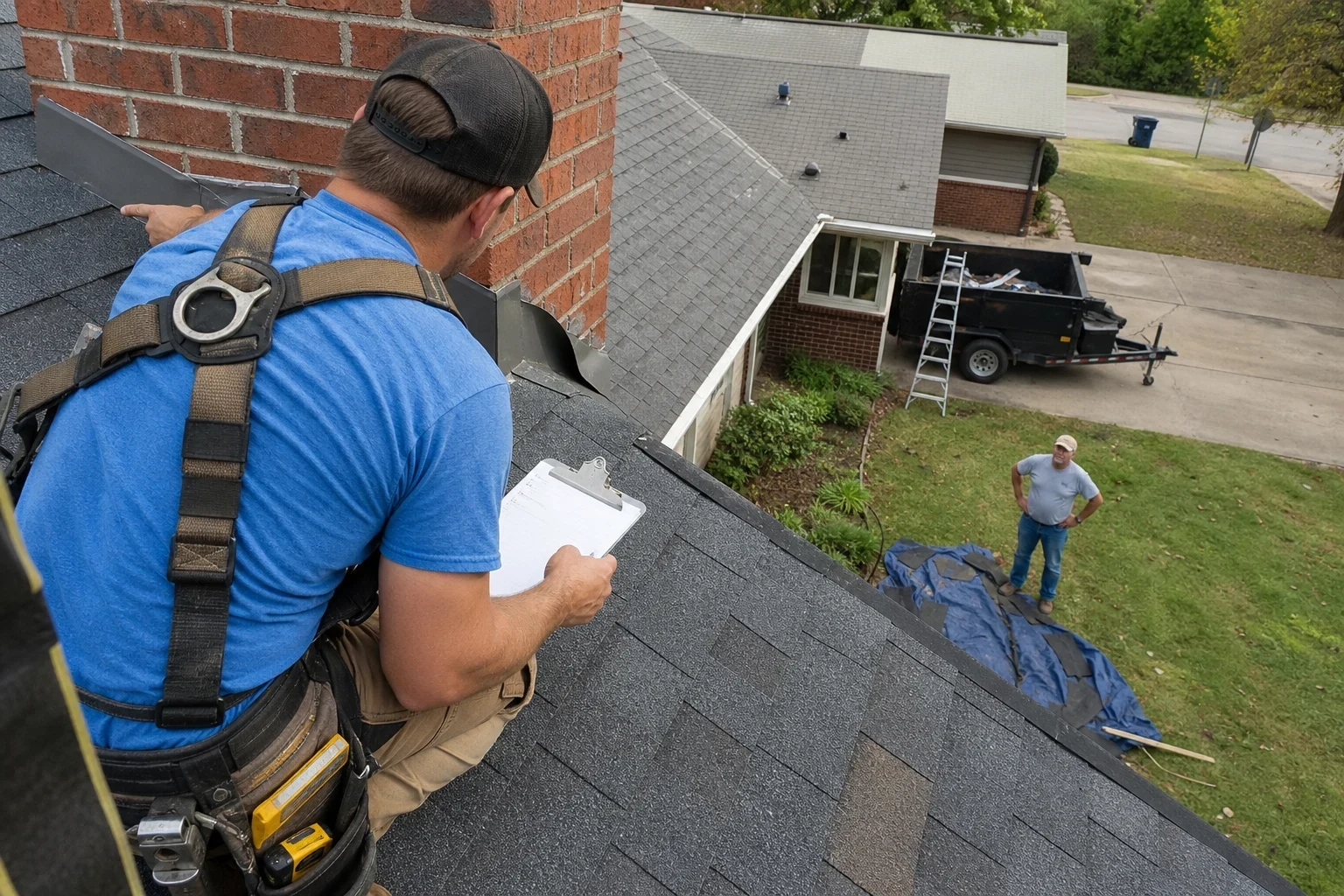
What a Roof Inspection Tells You
A water stain on a ceiling rarely sits directly under the leak. Water enters at a cracked pipe boot or a lifted flashing seam, runs along the decking or a rafter, and drips out several feet away. A quick look from the driveway misses that. Our inspection follows the path back to where the water or wear starts.
We check the roof covering, the metal and sealant details where most leaks begin, the attic side of the decking, and the gutters that carry water off. Then we tell you what is failing, what is aging normally, and what can wait. Sometimes the answer is a small repair. Sometimes it is that the roof has years left and needs nothing at all.
An inspection is also the right first step before you buy or sell your home, after a hard hail or wind season, or when you are deciding between roof repair and roof replacement.
What We Check on Every Inspection
Shingles and granule loss
We look for shingles that are cracked, curled or gone, and for patches where the mineral surface has rubbed away to bare asphalt. That granule layer blocks UV light, so a shingle that loses it dries out and splits much sooner.
Flashing and penetrations
We examine step flashing along walls, counterflashing at the chimney, metal in the valleys, and the rubber boots that seal vent pipes. Cracked boots and loose flashing are behind more leaks than tired shingles.
Attic and decking
Inside the attic we look at the underside of the decking for dark stains, soft areas, mold, and pinpoints of daylight at nail holes. We also check intake and exhaust vents, since heat trapped in the attic cooks shingles from underneath.
Fasteners and seal strips
Strong gusts can pop the adhesive bond beneath a shingle tab and leave the shingle in place. We gently lift tabs on exposed slopes to test the bond and watch for nails pushing up into the shingle above.
Gutters and drip edge
We confirm the gutters slope toward the downspouts, the downspouts flow freely, and the drip edge sends runoff into the gutter rather than letting it curl back onto the fascia.
Photo documentation
Anything we flag is photographed, so you see the split boot or the loose tab with your own eyes rather than relying on our description.
When Your Roof Needs a Closer Look
Brown rings on drywall
Any discoloration on a ceiling or upper wall means water has already reached the interior. Where it shows up is often not where it got in, and tracing it back is the point of the inspection.
Grit collecting at the downspouts
A new roof sheds some loose granules for a few months. On an older roof, a steady pile of grit at the downspout outlets tells you the shingle surface is wearing thin.
Hail or high wind just came through
Hail can crack the shingle mat without leaving anything you can spot from the ground. After a hard spring storm season in central Oklahoma, a close inspection finds that damage while it is still dry.
A roof more than 15 years old
Many asphalt shingle roofs start showing their age around this point. A baseline inspection tells you how much life is left so you can budget instead of react.
A home sale on the calendar
A documented record of the roof's condition gives both buyer and seller something solid to negotiate from and avoids an unpleasant discovery after closing.
How Inspection Day Works
- 1
We hear what you have noticed
First we ask where stains showed up, when the leaks happen, and whether they come with wind-driven storms or long steady rain. That timing pattern often narrows down the cause before we climb.
- 2
Roof surface check
Where footing and weather allow, we go up and cover each slope, valley and penetration, taking photos as we go. If a roof is too steep or too brittle to walk without harm, we use careful access points and close-range photos instead.
- 3
Attic check
Next we head into the attic and compare what we saw on top with any staining, wet insulation or venting problems underneath.
- 4
Your report and next steps
We sit down with you and the photos, explain what caused each issue, and hand you a written summary with our straight recommendation. When a repair is the right move, we tell you. When the roof needs nothing, you hear that just as plainly.
What Changes the Price of an Inspection
The steps are the same on nearly every roof, but some roofs simply take more time to cover properly. We quote the inspection price over the phone before anything is scheduled, so you know the number going in.
- Square footage and slope
- More roof area means more ground to cover, and a steep pitch slows every step because footing and safety come first. Both add time on site.
- Chimneys, skylights and valleys
- Each chimney, skylight, dormer or valley brings its own flashing and sealant joints. More of those details means more places to examine up close.
- Getting into the attic
- A cramped attic, or one with little flooring over the joists, makes it slower to reach and check the underside of the decking.
- What the report is for
- A routine checkup needs less paperwork than a report for a home sale or an insurance claim, which usually calls for more photos and fuller notes.
Roof Inspection Questions
Something not covered here? (405) 704-3659
How long does a roof inspection take?
Most single-story homes take about an hour to an hour and a half. A steep pitch, a larger footprint, or several chimneys and skylights add time. When you schedule, we tell you how long to expect us.
Do I need to be home?
It helps if you are, mainly so we can get into the attic and hear when and where you have seen leaks. If your schedule does not allow it, we can inspect the exterior on our own and go over the results with you by phone afterward.
Is the inspection just a pitch for a new roof?
No. Our job on that visit is to find the cause and describe the roof's condition as it really is. Plenty of roofs need only a resealed flashing seam or a new pipe boot, and some need nothing. When replacement is the honest answer, the photos show you why.
Will the inspection be useful for my insurance claim?
It can be. We photograph the damage and note the likely cause, and that record is yours to send to your insurer. The adjuster makes the coverage decision, not us, but we can walk you through what we found and meet the adjuster at your home if you would like us there.
How often should my roof be inspected?
Every one to two years suits most homes, along with a check after any serious hail or wind. On an older roof, a yearly look catches small failures before they turn into leaks.
Find Out What Your Roof Actually Needs
We serve The Village, Nichols Hills, Warr Acres, and the surrounding area. Tell us what you have noticed and we will set up a time to inspect it.