ServicesCommercial Roof Replacement
Commercial Roof Replacement in The Village, OK
Before we price a new roof, we cut cores, scan for trapped moisture and trace every leak back to its source. That tells us whether you need a full tear-off, a recover over dry insulation, or less than you were told. Then we build the system to match.
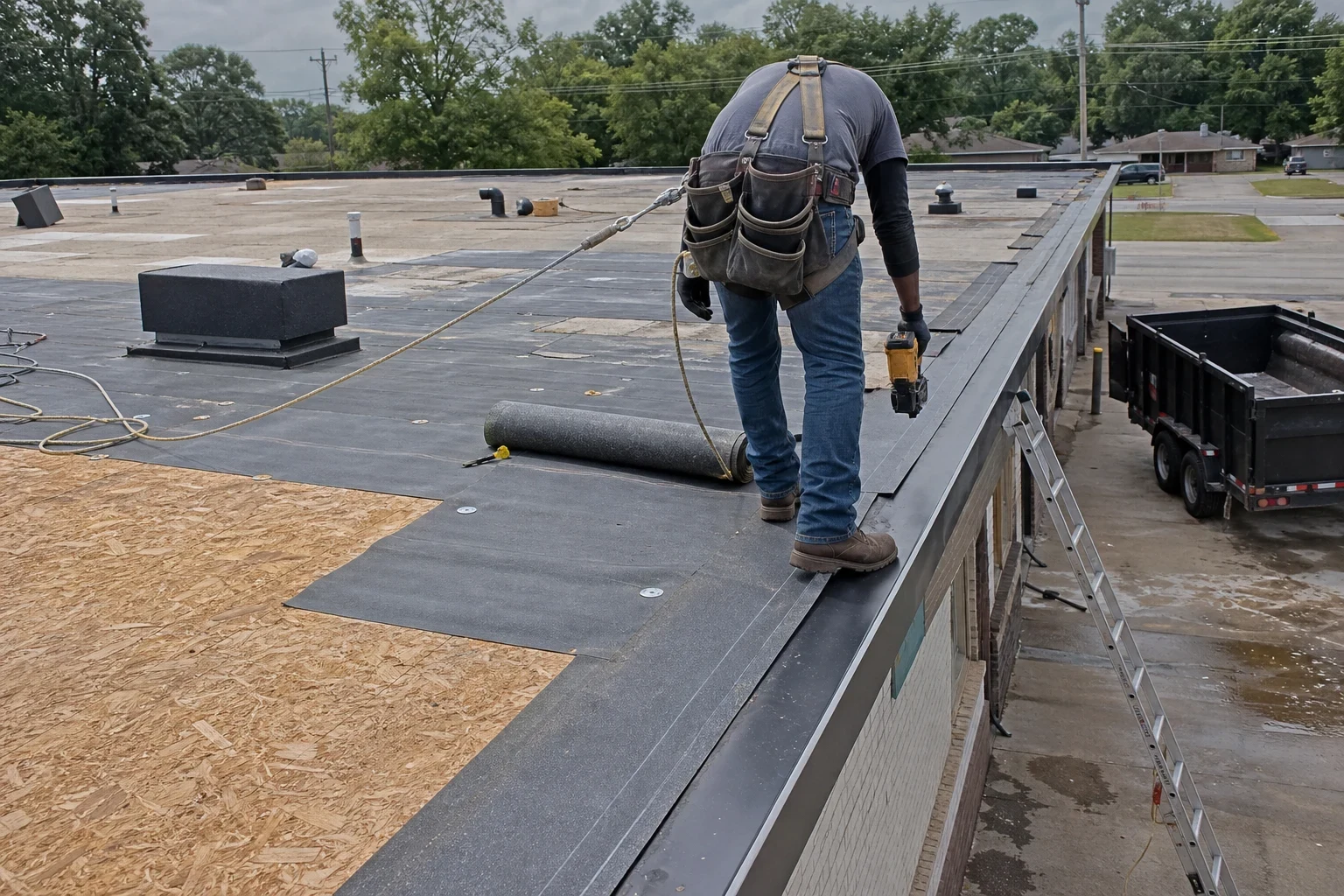
When replacing a commercial roof is the right call
Most low-slope roofs fail from the inside out. A split seam or a cracked pitch pocket lets water into the insulation, and wet polyiso or fiberboard keeps spreading moisture long after the surface looks patched. Once a large share of the insulation is saturated, repairs stop holding and replacement becomes the cheaper path over time.
We don't guess at that share. We take core samples down to the deck, run moisture or infrared readings across the field and map the wet areas. If the damage is limited, we will tell you, and Commercial Roof Repair may be the better fit. If it is widespread, you get a replacement plan sized to what we actually found.
What a commercial reroof with us includes
- Core cuts and moisture mapping
- We cut small test cores to see each layer: membrane, cover board, insulation and deck. Moisture readings show where water has migrated, which decides between tear-off and recover.
- Membrane selection
- We install TPO, EPDM, modified bitumen and other low-slope systems. The choice depends on your building's use, rooftop traffic and how the existing deck and substrate will accept fasteners or adhesive.
- Tapered insulation for drainage
- Ponding water ages a membrane fast. Where your roof holds water, we design tapered insulation and crickets that steer it to drains and scuppers.
- Flashing at every penetration
- Curbs for rooftop units, vent pipes, parapet walls and expansion joints get new flashing tied into the membrane. These details are where most commercial leaks start, so we don't reuse tired metal or old base flashing.
- Edge metal and coping
- New perimeter edge, gravel stop or parapet coping holds the membrane against wind uplift and sheds water off the wall.
- Permit and cleanup
- We pull the permit, coordinate inspections and haul away all tear-off debris. Grounds and parking areas are swept for fasteners each day.
Signs your commercial roof needs replacing, not patching
Leaks that return after repair
If the same ceiling tiles stain again after a patch, water is likely traveling through wet insulation and coming out far from where it entered.
Soft spots underfoot
A spongy feel when walking the roof usually means crushed or saturated insulation below the membrane.
Water standing two days after rain
Persistent ponding points to sagging deck or insulation and breaks down seams and coatings over time.
Shrinking or blistering membrane
Older EPDM pulls away from edges and curbs as it shrinks. Blisters on built-up and modified bitumen roofs mean trapped moisture or lost adhesion.
Damage after hail season
Hail across central Oklahoma can fracture membranes and crush insulation without obvious holes. Our Storm Damage Repair team can document it if a claim is involved.
What moves the price of a commercial roof
The biggest swing in cost is what sits under the membrane today. A recover over dry insulation costs far less than a full tear-off to the deck. That is why we take cores before quoting anything.
Wet insulation and deck condition
Every square foot of saturated insulation has to come out. Rusted metal deck or rotted wood deck adds replacement work.
Membrane and insulation choice
System type, membrane thickness and the R-value you want all change material cost.
Drainage corrections
Tapered insulation, crickets and new drains add material but often prevent the ponding that shortened the old roof's life.
Rooftop equipment and access
Many units, curbs and pipes mean more flashing labor. Tall walls or tight sites may require a crane or extra protection.
How the replacement runs
- 1
Assessment on the roof
We walk the field, inspect drains and flashings, take cores and moisture readings, and photograph what we find. You see the evidence, not just a conclusion.
- 2
Written scope and quote
You get a line-item scope: tear-off or recover, membrane type, insulation thickness, tapered areas, flashing and edge metal. Each item ties back to something we found.
- 3
Scheduling around your business
We plan staging, crane lifts and noisy tear-off around your hours and tenants. Only as much roof is opened each day as we can dry in by evening.
- 4
Installation and detail work
Insulation goes down, the membrane is fastened or adhered, seams are welded or sealed and probed, and every penetration is flashed.
- 5
Final walk and inspection
We water-test suspect details, clear debris, pass the permit inspection and walk the finished roof with you.
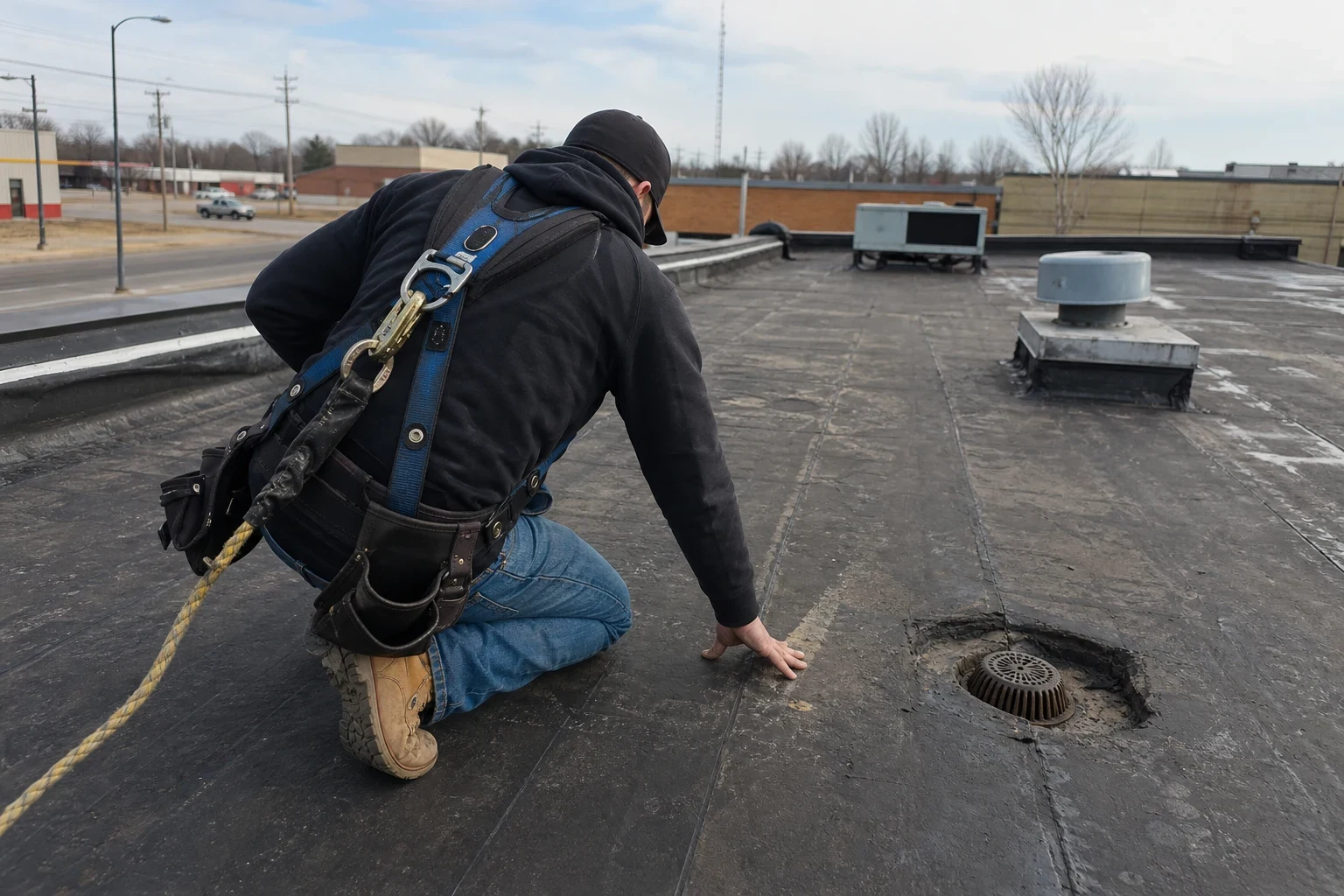
Commercial roof replacement questions
Can you install a new roof over the old one?
Sometimes. Code generally allows a recover when there is only one existing roof layer and the insulation underneath is dry. Our core cuts and moisture readings tell us if that is true for your building. If the insulation is wet, covering it traps the water and the new membrane fails early.
Can my business stay open during the work?
In most cases, yes. We schedule the loudest tear-off around your hours, keep entrances clear and dry in every section the same day it is opened. We'll talk through deliveries, parking and tenant notices before we start.
Which membrane is best for my building?
It depends on the building. TPO reflects heat and suits many flat roofs with welded seams. EPDM handles temperature swings well. Modified bitumen stands up to foot traffic around equipment. We recommend based on your deck, use and drainage, not on a single favorite.
How long does a commercial reroof take?
Size, weather and how much wet material comes out set the schedule. A small building may take a few days, larger roofs longer. You'll get a planned timeline with the written scope.
Do you handle the permit?
Yes. We pull the permit, schedule the inspections and make sure the finished roof meets the requirements that apply to your building.
Find out what your roof actually needs
We'll cut cores, read the moisture and show you whether replacement is warranted before you commit to anything. Get your quote by phone.