ServicesGutters
Gutters in The Village
We install, re-hang and repair gutters on your home. Before we quote anything, we find out why the water is going where it shouldn't: a bad pitch, an undersized downspout, a missing gutter apron or rotted fascia. Then we fix that cause, not just the symptom.
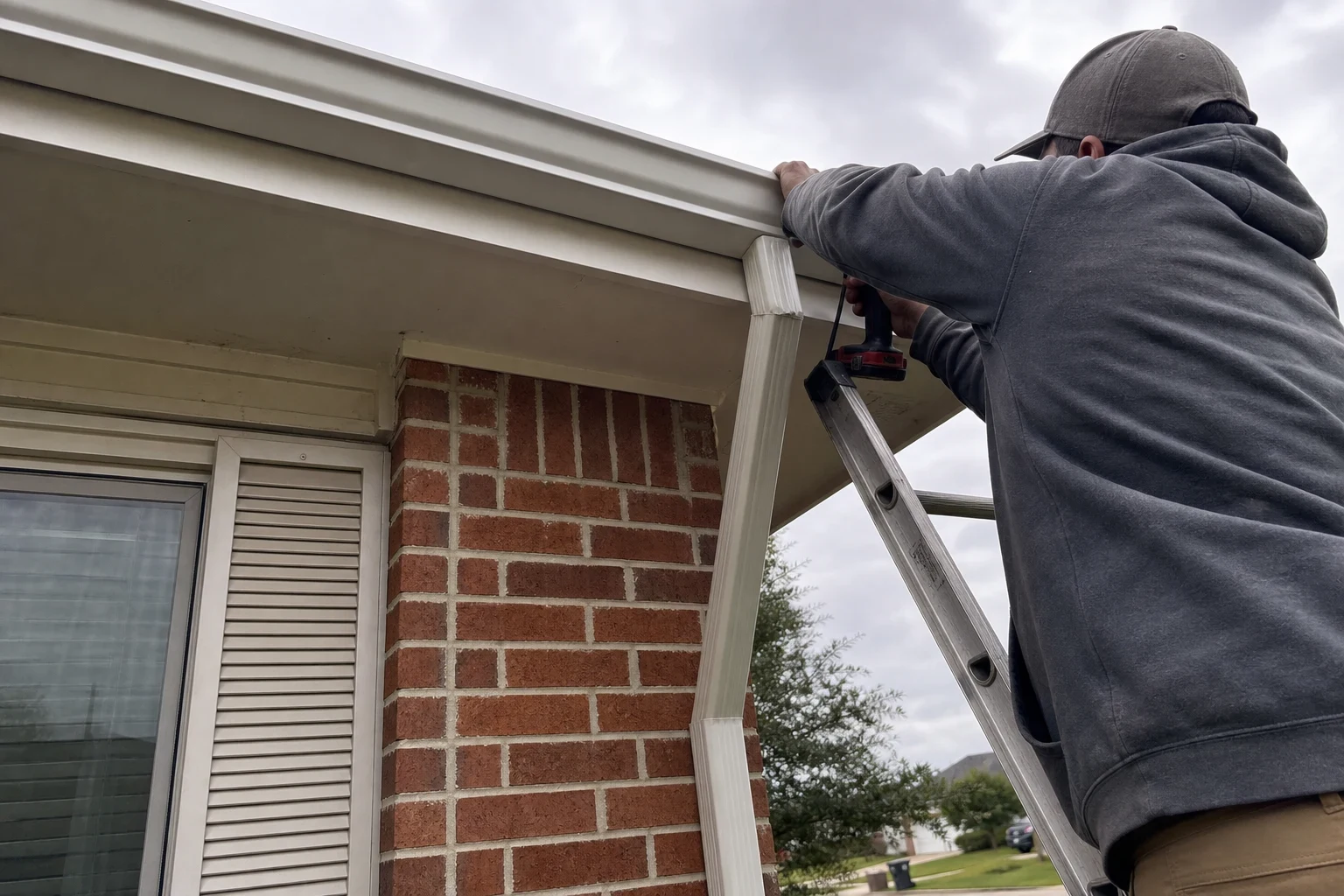
Gutters fail for specific reasons, and the fix depends on which one
A gutter that overflows in a hard rain might be clogged. It might also be pitched backward, sagging between loose spikes or draining into a single 2x3 downspout that can't keep up with a long roof run. Cleaning it will not help the last three. That's why we look at the whole drainage path before recommending work: the roof edge, the drip edge, the hangers, the slope and where the downspout empties.
Oklahoma storms can drop a lot of water in a short window, and our expansive clay soil swells and shrinks with moisture. Water dumped at the foundation is one of the more common reasons for settling and damp crawlspaces. A gutter system that's sized and pitched correctly carries that water out and away from your home.
What our gutter work covers
- One-piece aluminum gutters
- We roll K-style aluminum gutters on site, cutting each run to the length of that eave in a single continuous piece. Joints only appear where a run turns a corner or terminates. With so few connections, there is little sealant to dry out and start dripping.
- Sizing for your roof
- Plenty of homes carry 5-inch gutters below roof planes that really call for 6-inch, especially on steep or long slopes. We calculate the roof area feeding each run and choose the gutter and downspout size from that.
- Pitch and hangers
- Each run gets a steady fall toward its outlet, about a quarter inch per ten feet. Hidden hangers are screwed into the fascia roughly every two feet, because screws keep their grip long after old spikes back out.
- Gutter apron and drip edge
- Water running down behind the gutter almost always traces back to a gutter apron that is missing or too short. We fix the flashing at the roof edge so runoff drops into the trough instead of wetting the fascia.
- Fascia repair
- A hanger can't hold in soft, rotted wood. We cut out and replace bad fascia sections before the new gutter goes up, giving it a solid board to fasten to.
- Downspouts and discharge
- Downspouts go where the water actually gathers on your roof. We carry the discharge away from the foundation with extensions or splash blocks.
Signs your gutters need attention
Overflow at one spot
Water spilling over the front lip at the same place every storm usually means a low spot, a blocked outlet or a downspout too small for the flow. We figure out which before touching anything.
Stains or rot behind the gutter
Dark streaks on the fascia or peeling paint on the soffit mean water is getting behind the trough. That is often a flashing problem, not a gutter problem.
Sagging or pulled-away sections
Gutters that dip or lean out from the house have lost their hold, often after an ice storm or a load of wet leaves. Standing water in a sagging run adds weight and makes it worse.
Dripping corners and joints
Older sectional gutters start leaking at every joint once the sealant dries out. Patching them over and over can end up costing more than replacing the runs with one-piece gutters.
Pooling or erosion near the foundation
Washed-out mulch beds, a trench under a downspout or a damp crawlspace mean the water isn't being carried far enough from your home.
What moves the price of a gutter job
Two things set the number: the amount of gutter and downspout your home needs, and the condition of the wood and flashing it hangs from. We look at both before quoting. Your estimate lists each part separately so you can see what each piece of the work costs.
Linear footage and stories
The total run of gutter and downspout drives most of the cost. Second-story eaves take more ladder setup and slower, careful work than a one-story ranch.
Gutter size and downspout count
A 6-inch trough with 3x4 downspouts costs more than 5-inch with 2x3, yet it is often what a long or steep roof plane needs to keep from overflowing.
Fascia and flashing condition
Rotted fascia boards or a missing gutter apron add carpentry and flashing to the job. We catch these while diagnosing, so the install crew isn't discovering them halfway through.
Corners and rooflines
Every inside or outside corner needs a mitered joint, and dormers or valleys that dump water in one spot may need an extra outlet. A busy roofline means more of both.
How a gutter job runs
- 1
Diagnose the drainage path
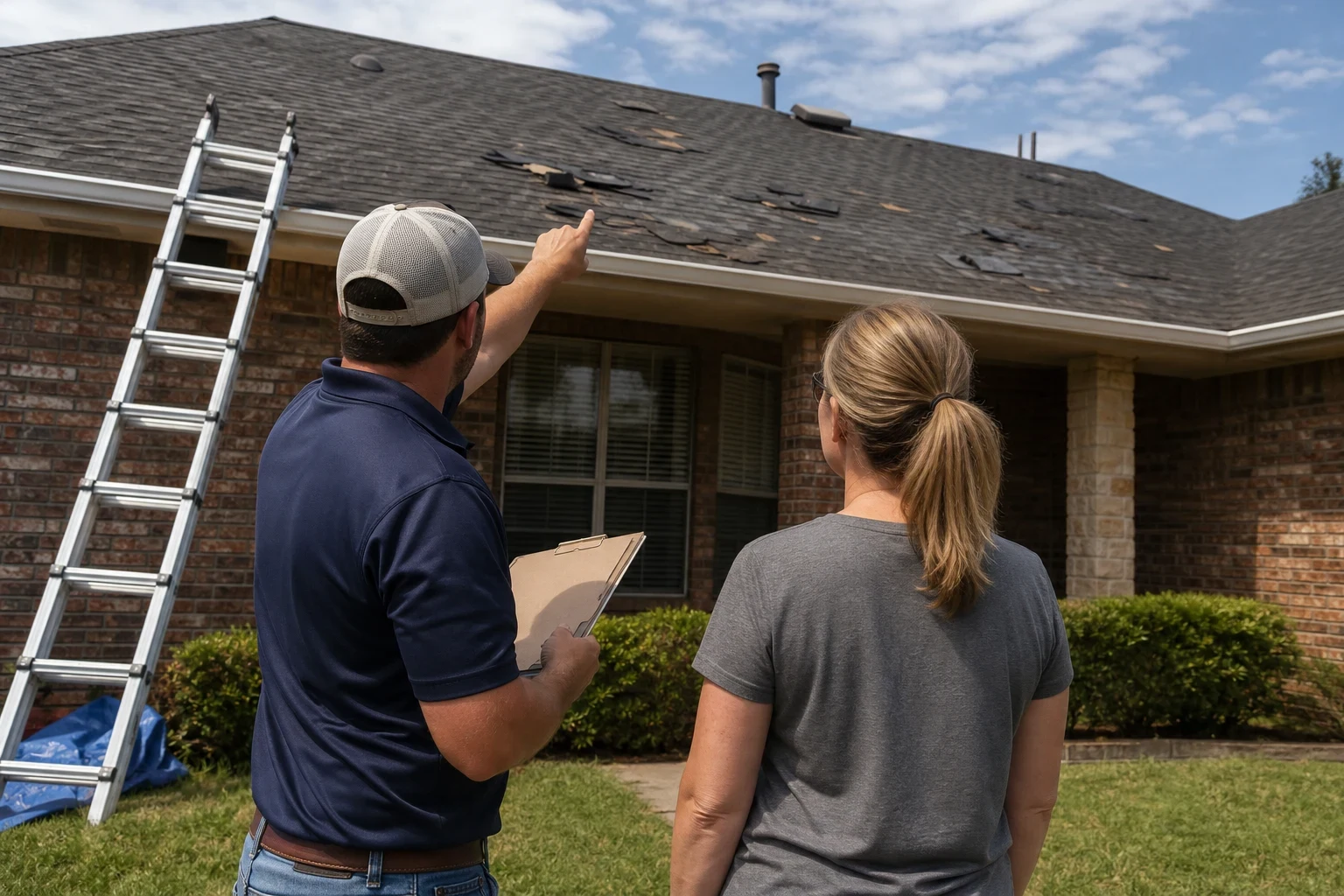
We walk the roofline, check slope with a level, inspect the fascia and roof edge, and mark where water spills or pools. We photograph each trouble spot and explain in everyday terms what is causing it.
- 2
Written estimate by line item
The estimate breaks out gutter footage, downspouts, fascia boards and flashing. When a repair will solve the problem, we tell you that rather than pitching a whole new system.
- 3
Install day
We take down the old gutters, swap out damaged fascia, correct the gutter apron, then form the new gutter on site and hang it to slope. On most homes the crew finishes before the end of the workday.
- 4
Flow check and haul-away
Before we leave, a hose goes into every run so we can watch the water reach each outlet. Then the old gutters go on our truck, and we sweep the yard and beds for nails and cut scraps.
Gutter questions we hear
Should I repair my gutters or replace them?
A sound trough with a loose hanger, a clogged outlet or one leaking joint is a repair. Leaks at joint after joint, or a whole run sloped the wrong way, usually make replacement the smarter spend. We look first and tell you which one fits.
Why does water come out behind my gutters?
In most cases the shingles or drip edge stop short of the back of the trough, so runoff slips down the face of the fascia instead of into the gutter. Adding a gutter apron closes that gap. A new gutter on its own leaves the same gap in place.
Do I need 6-inch gutters?
It depends on how many square feet of roof drain into each run and how steep that roof is. A steep or long plane sheds water faster than a 5-inch trough can carry it during a downpour. We measure your roof and pick the gutter size to match, rather than defaulting to whatever is standard.
Can you do gutters when you replace my roof?
Yes. Pairing them with a roof replacement lets us install the drip edge and gutter apron correctly while the roof edge is open. If a storm damaged both, our storm damage repair work can handle the roof and gutters as one job.
Will gutter guards stop overflowing?
Guards keep leaves and debris out of the trough, but they do nothing for a gutter that slopes away from its outlet or a downspout too small for the flow. We correct the drainage first, then talk about guards if the trees around your home justify them.
Find out why your gutters are failing
Tell us what you're seeing in a rainstorm and where the water ends up. We'll set a time to look at the roof edge, the pitch and the downspouts, then explain what's causing it.