ServicesCommercial Roof Repair
Commercial Roof Repair in The Village
We repair low-slope and metal roofs on shops, offices and small commercial buildings. Before any patch goes down, we trace where the water actually enters, because on a flat roof the stain inside is often several feet from the opening above. You get a repair aimed at the cause.
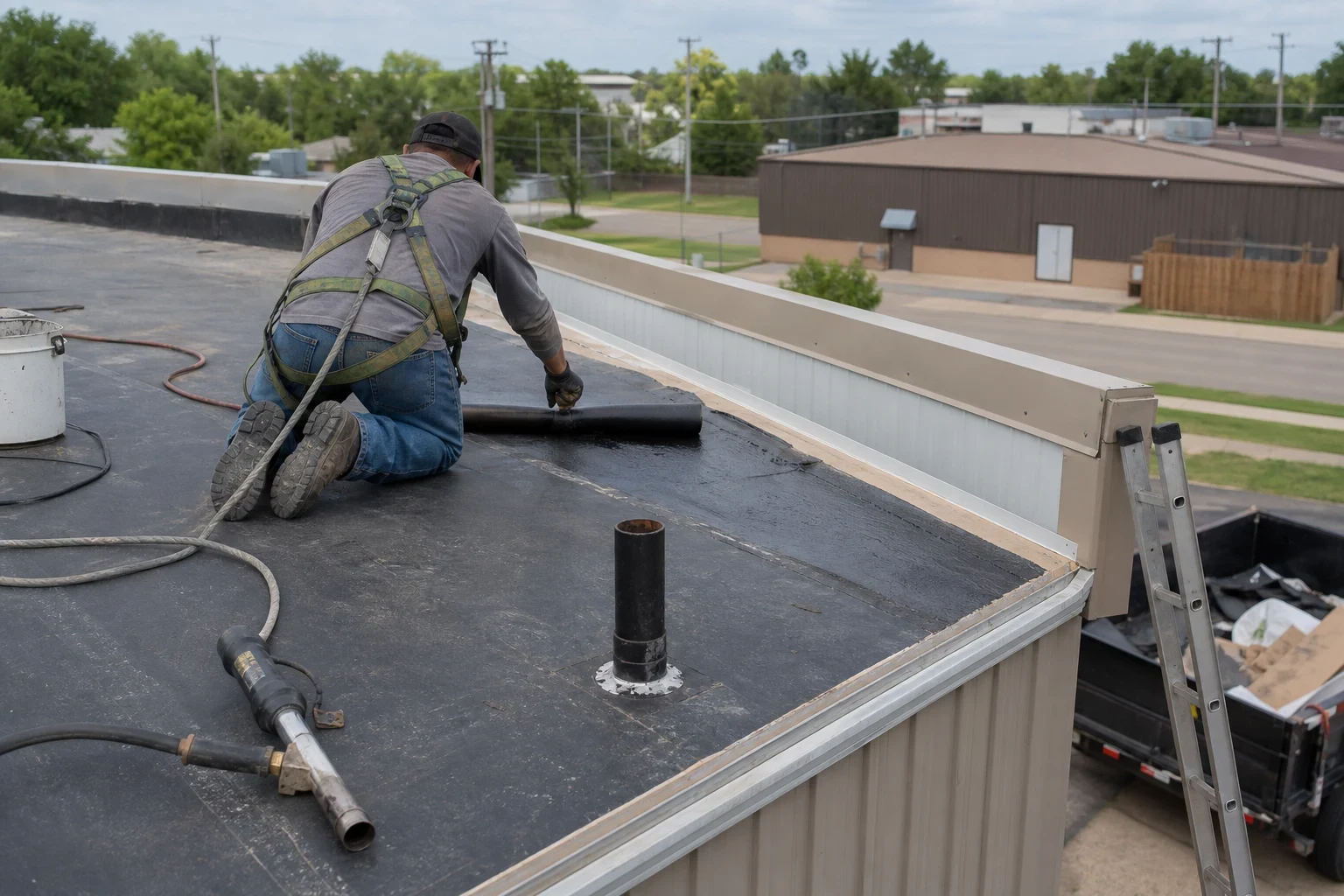
Why commercial leaks are hard to pin down
Water on a low-slope roof travels. It slips under a loose seam, runs along the top of the insulation board and drips through wherever the deck has a gap. A crew that patches directly above the ceiling stain is guessing, and the leak usually returns with the next heavy rain.
We start at the places membranes fail most: field seams, flashing at parapet walls, curbs around rooftop units, pipe boots, drains and scuppers. We probe seams, check the membrane for punctures and shrinkage, and watch how water moves toward the drains. Then we tell you what failed, why it failed, and whether repair is still the sensible choice or the roof is due for commercial roof replacement.
Central Oklahoma hail and wide temperature swings stress every one of those details, so we repair with material that matches and bonds to what is already on your roof.
What our commercial repair work covers
Seam and lap repair
TPO and PVC seams are heat-welded, and when a weld lets go we clean, prep and re-weld it or cover it with a compatible membrane patch. EPDM laps get primer and seam tape, not a bead of caulk that peels in a season.
Flashing at walls, curbs and penetrations
Most commercial leaks start where the membrane turns up a parapet, a rooftop unit curb or a pipe. We refasten or replace termination bars, re-flash curbs, replace cracked pipe boots and reseal counterflashing so the transition sheds water again.
Drains, scuppers and low spots
A strainer packed with debris or a sagging section of deck keeps water on the roof long enough to find a tired seam. We clean out strainers, reseat loose drain clamping rings, clear scuppers and mark the areas where water lingers after rain.
Punctures, blisters and cracks
Dropped tools from HVAC service, hail bruising and blisters in modified bitumen or built-up roofs are cut out and patched with matching plies or membrane.
Metal roof leak repair
On metal panel roofs we replace stripped fasteners and worn neoprene washers, reseal end laps and ridge closures, and fix leaks around penetrations.
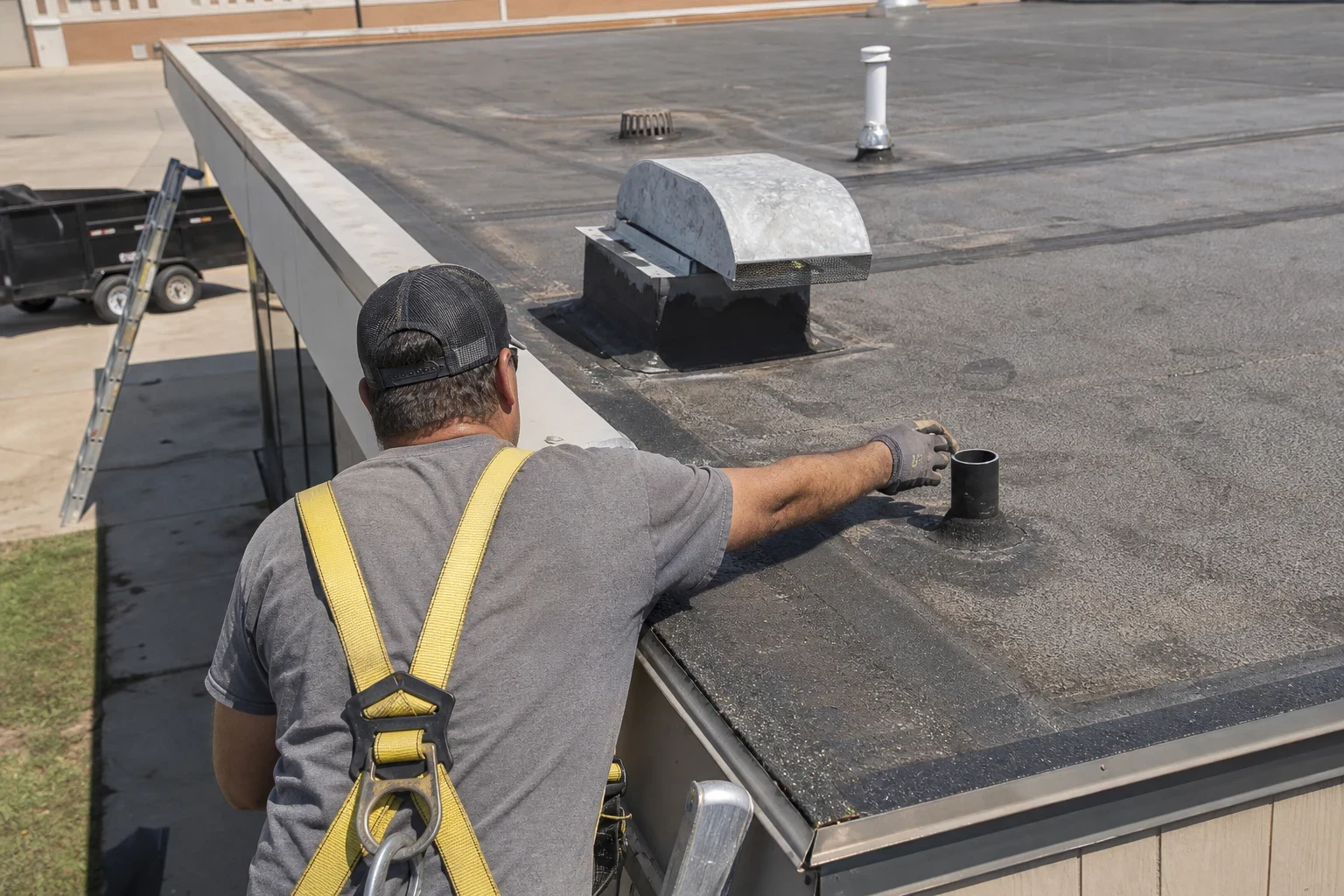
Signs your commercial roof needs repair
- Stained or sagging ceiling tiles
- A brown ring on an acoustic tile after rain means water is already through the deck. The tile shows where it lands, not where it entered.
- Water standing two days after rain
- Ponding that lingers adds weight, speeds membrane aging and puts constant pressure on every seam it covers.
- Membrane pulling at the edges
- Older EPDM shrinks and can pull away from parapets and curbs, leaving the flashing stretched tight across the corner. Once it tears, water runs straight into the wall.
- Leaks that start after rooftop work
- If drips began after a unit was serviced or replaced, look for punctures, cut flashing or a curb that was disturbed.
- Rust or loose fasteners on metal
- Backed-out screws and rust at laps let water in a little at a time, often long before anyone sees a drip inside.
How a repair visit runs
- 1
The phone call
You tell us about the building, the roof type if you know it, and where water shows up inside. We set a time to come out and sort out roof access, whether that is a hatch, a ladder or a key.
- 2
Diagnosis on the roof
We walk the whole roof, not just the area over the leak. We probe seams, inspect flashing and drains, and when needed we water test suspect areas one at a time to confirm the entry point.
- 3
Findings and estimate
You get photos of what we found, a plain explanation of the cause and a written line-item estimate. If the roof is past the point where repairs make sense, we say so.
- 4
The repair
We use materials compatible with your existing system and plan the work around your business hours so staff and customers are not disrupted. Debris stays off walkways and away from rooftop equipment.
- 5
Check and cleanup
We confirm the repaired area drains properly, haul off scrap and send photos of the finished work for your records.
What drives the cost of a commercial repair
We price a repair after we know what failed, not before. Two leaks that look identical from inside can come from very different problems on the roof. Every line on your estimate is tied to a specific task or material, so the total is never one unexplained number.
- Roof system and material
- Welding a TPO seam, priming and taping EPDM and patching built-up plies each take different materials and tools.
- Wet insulation underneath
- If water has soaked the insulation board, the wet section has to be cut out and replaced. Leaving it keeps the deck damp, and a patch over wet board will not hold.
- Extent and location of damage
- One failed pipe boot is a small job. Flashing that has pulled loose along a full parapet wall is a larger one.
- Access and rooftop equipment
- Roof height, hatch access and units that must be worked around all affect labor time.
- Scheduling around operations
- Work timed for early mornings or closed hours to keep your business running can change how the job is staffed.
Commercial roof repair questions
- Can the roof be repaired, or does it need replacing?
- Many commercial roofs leak from a few failed details while the rest of the membrane is sound. Those are good repair candidates. If we find widespread wet insulation, brittle membrane or seams failing across the roof, we will tell you repair money is better spent on commercial roof replacement.
- Can you work while our business is open?
- Usually, yes. Most repair work happens on the roof with little noise below. For jobs that involve heat welding near air intakes or cutting out wet insulation, we coordinate timing with you ahead of time.
- Which roof types do you repair?
- We repair TPO, PVC, EPDM, modified bitumen, built-up and metal panel roofs. The repair material has to match the system, so identifying the roof type is part of our first visit.
- Our roof has been patched before and still leaks. Can you find the problem?
- Repeat leaks usually mean earlier patches treated the drip location instead of the entry point. We look past the old patches to the seams, flashing and drains upslope of the leak and confirm the source before we repair it.
- Will a repair affect our existing roof warranty?
- Some manufacturer warranties set rules for who may repair the roof and how. Tell us about any warranty when you call, and check its terms before work starts so the repair does not put that coverage at risk.
Get the leak traced, then fixed
Tell us where water shows up inside and what kind of roof the building has. We will come out, pin down the entry point on the roof and explain the repair before any work begins.