ServicesRoof Repair
Roof Repair in The Village, OK
The stain on your ceiling usually shows up several feet away from where water slips past the shingles. We trace its route through the decking, rafters and insulation back to the real entry point and fix that spot, so one leak does not turn into two repair bills.
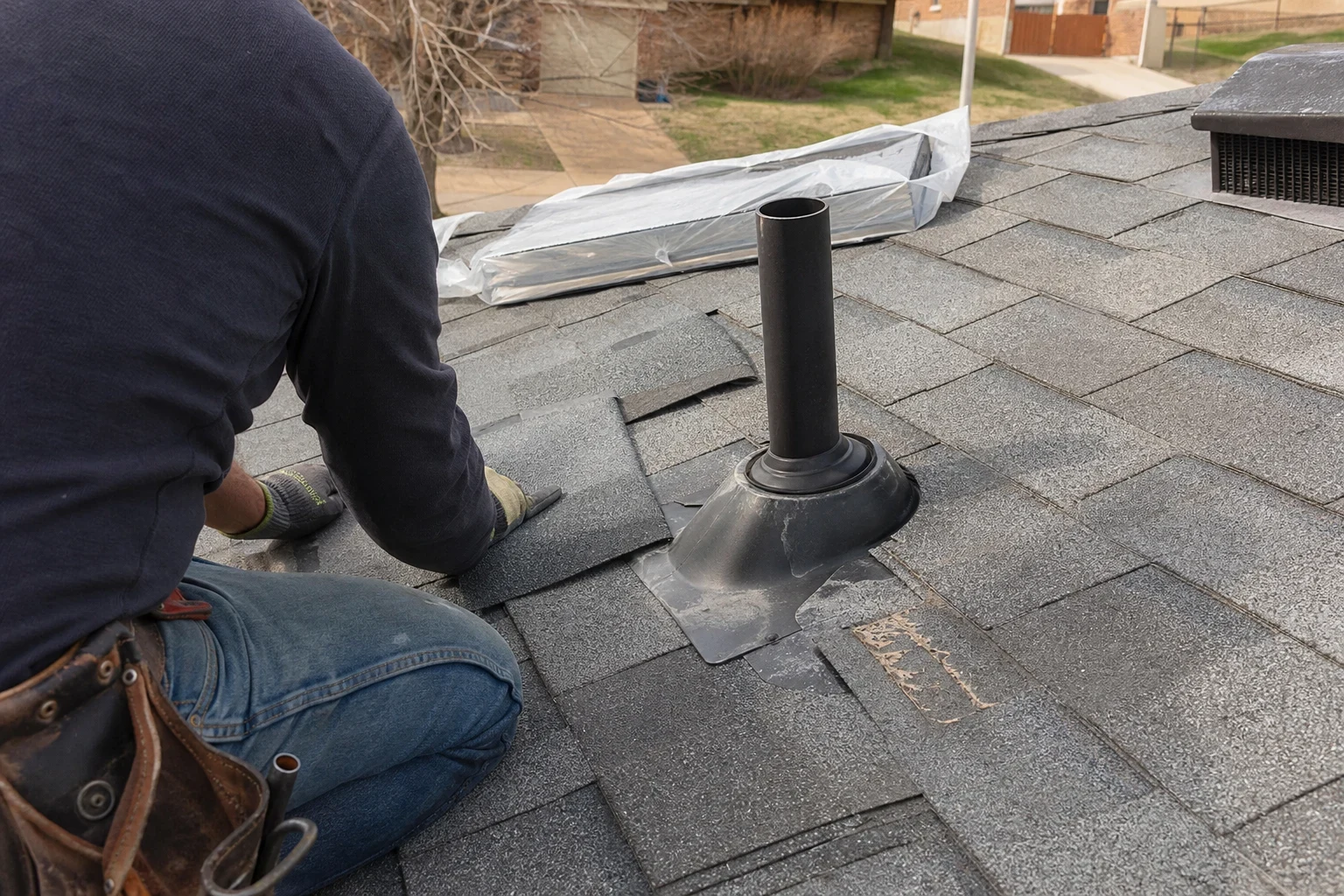
Fix Where the Water Gets In
Water rarely drops straight down. It gets under a shingle, runs along the felt or down a rafter, and falls wherever the slope sends it. A patch set right above a stain often misses the real problem for that reason. Our first job is to find the true entry point, which is usually a split pipe boot, step flashing that has separated from a wall, a fastener that has worked its way up, or a valley that has worn through.
Repair makes sense when the damage is confined to one area and the rest of the roof still has years left. When shingles are brittle on every slope or the decking gives underfoot in several places, a patch only buys a little time. In that case we will say so and explain what our roof replacement service would involve for your home.
What a Roof Repair From Us Includes
Tracing the leak
We start in the attic with a flashlight and a moisture meter, then line up what we find with the outside of the roof. Water marks, darkened sheathing and rusty nail tips lead us to where water is getting in.
Flashing work
We reset or replace chimney counter-flashing, step flashing along sidewalls and drip edge. Repeat leaks most often begin at a flashing joint rather than in the open slope.
Pipe boots and roof vents
The rubber collar on a pipe boot splits after years of summer sun and heat. We install a new boot instead of coating the old one, since sealant shrinks and pulls loose within a few seasons.
Replacing shingles
Any shingle that is torn away, folded at the crease or no longer lying flat gets pulled, and a fresh one is nailed and hand-sealed in its place. We match color and profile as closely as current products allow, and if no exact match is made, we tell you before the work starts.
Decking repair
Where water has rotted plywood or plank sheathing, we cut back to solid wood and fit new decking before the area is reroofed.
Nail pops
Freeze-thaw cycles slowly push nails upward until they lift the shingle above them. We pull and reset those fasteners so the shingle lies flat and seals again.
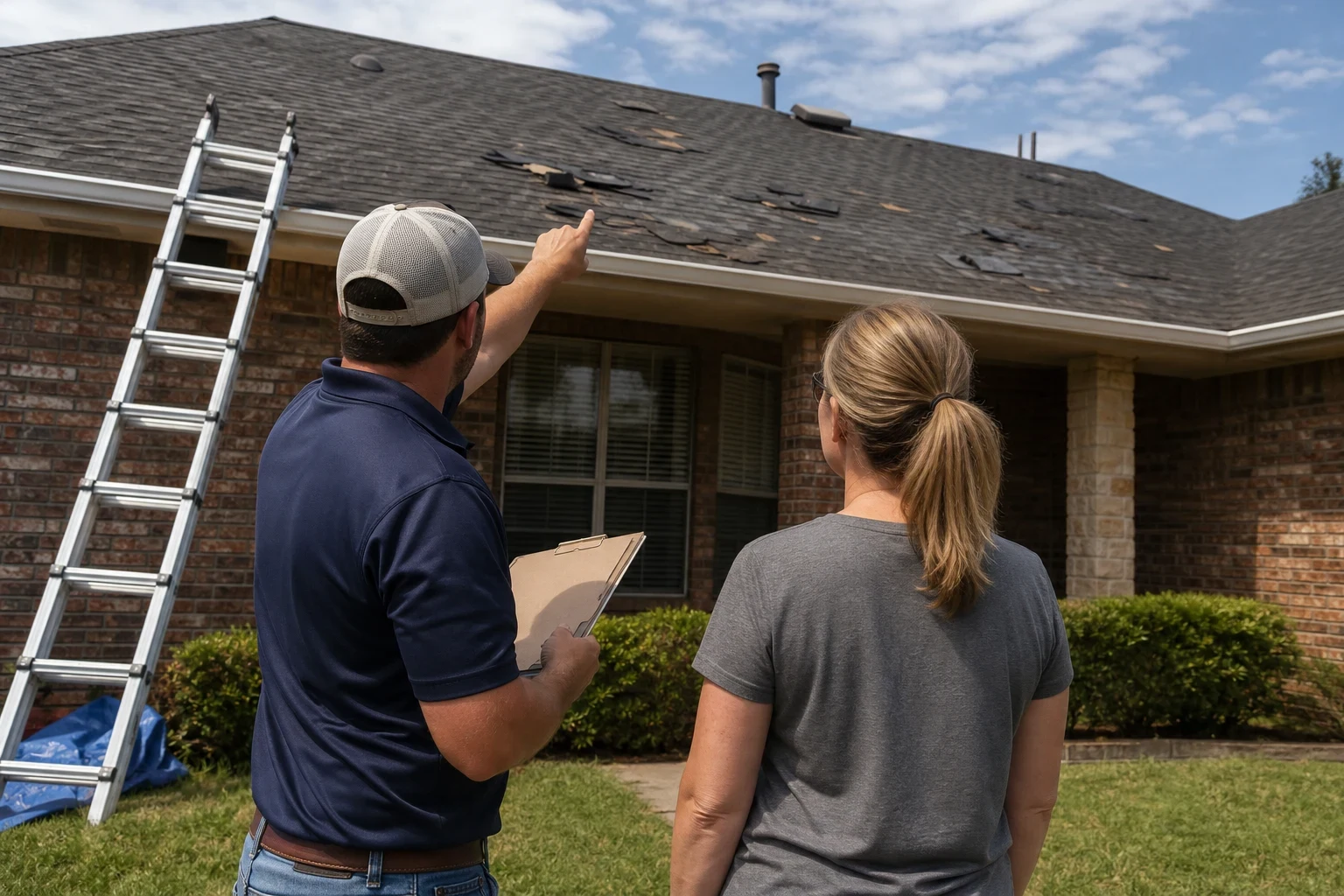
Signs It Is Time for a Roof Repair
- Stains on ceilings or walls
- A tan or brown ring on drywall means water has been getting there for some time. Trace it even if it has dried, because some leaks only show up when rain is driven by wind.
- Shingles in the yard
- Finding tabs on the lawn after a windy night means the adhesive strips have let go in that area. Shingles beside the gap may be loose even though they still look fine.
- Granules collecting in gutters
- Lost granules leave the asphalt open to sunlight, and it cracks faster. A pile from one area points to local wear, while granules from every slope suggest the roof is aging out.
- Light coming through the attic
- If you can see daylight through the decking or around a vent base, water has a way in at that same spot.
- Wet insulation or a musty odor
- Flattened or damp insulation and a stale smell in the attic usually point to a slow leak or to ventilation that is holding moisture in.
What Happens During a Repair Visit
- 1
Start with a phone call
Tell us where the water appears, when it shows up and what the weather was like. A leak that only happens with a north wind, or only during a long steady rain, narrows the search before we ever get there.
- 2
Attic first, then the roof
We look from the inside before climbing up. Afterward we walk you through photos of the problem and tell you in plain language what caused it.
- 3
Line-item estimate
You get the repair in writing, item by item: materials, any decking that needs replacing and the labor. If replacing the roof would serve you better, we tell you and explain the reasoning.
- 4
The repair itself
We cover plants and beds below the work area, strip damaged material back to solid decking, and install new underlayment, flashing and shingles following the manufacturer's instructions.
- 5
Cleanup and final photos
Before we leave, a magnetic sweeper goes over the lawn, beds and driveway to pick up loose fasteners, and all torn-off material is loaded and taken away. Then we go over photos of the finished repair with you.
What Changes the Price of a Roof Repair
Two ceiling stains of the same size can lead to very different repairs. The real scope only shows once the damaged shingles are lifted, so we give you a written number after the inspection instead of guessing over the phone.
- How far the damage spreads
- Swapping one split pipe boot is a short job. Rot that has crept across the sheathing between several rafters needs more plywood, more shingles and more time.
- Location on the roof
- Leaks at a chimney, skylight or valley mean more flashing to fabricate and more tie-ins to weave back into the existing roof than a spot in the middle of a slope.
- Pitch and how we reach it
- A steep roof calls for harnesses, roof jacks and slower, more careful movement. A tall two-story eave or a narrow side yard makes carrying material up and down take longer.
- What is under the shingles
- Soft decking, bare spots with no underlayment, or a second layer of old shingles hidden below the top one all widen the job once they are uncovered.
- Finding a matching shingle
- When a shingle line has been discontinued or the roof uses a specialty product, sourcing takes longer, and sometimes a wider section has to be blended to look right.
Common Roof Repair Questions
- Could you just seal over the leak?
- Roofing cement can help in a few spots, but it does not fix a failed part by itself. A few rounds of Oklahoma summer heat and winter freezes crack it open, and the drip comes back. We replace whatever actually failed, whether that is a pipe boot, a length of flashing or a shingle, so the repair holds.
- Should I repair or replace my roof?
- When the damage is in one area and shingles on the other slopes still flex without cracking, a repair is usually the sensible choice. When every slope is brittle and losing granules, or a new leak turns up each season, replacement tends to be the better spend. Either way, we show you photos and explain how we reached that conclusion.
- Will the repaired section match the rest of the roof?
- We look for the same manufacturer, color and profile, and get as close as current products allow. Shingles that have been in the sun for years fade, so even an identical new shingle can look a shade brighter at first. We describe what you should expect before any work starts.
- Is the water definitely coming from the roof?
- Not every time. A leaking window head, a clogged gutter pushing water back under the drip edge, or a bath fan venting moist air into the attic can all look like a roof leak. Finding the source is the first thing we do on a visit, and if a gutter is to blame we can talk with you about our gutters service.
- Is hail damage handled as a regular repair?
- Shingles bruised or punctured by hail fall under our storm damage repair service, which includes documenting the damage for your insurance claim. A single leak caused by wear or an aging flashing detail is handled as standard roof repair.
Get the Leak Traced to Its Actual Cause
Let us know where the water shows up and what the weather was doing. We will check it from the attic and the roof, then tell you plainly which part failed and why.